
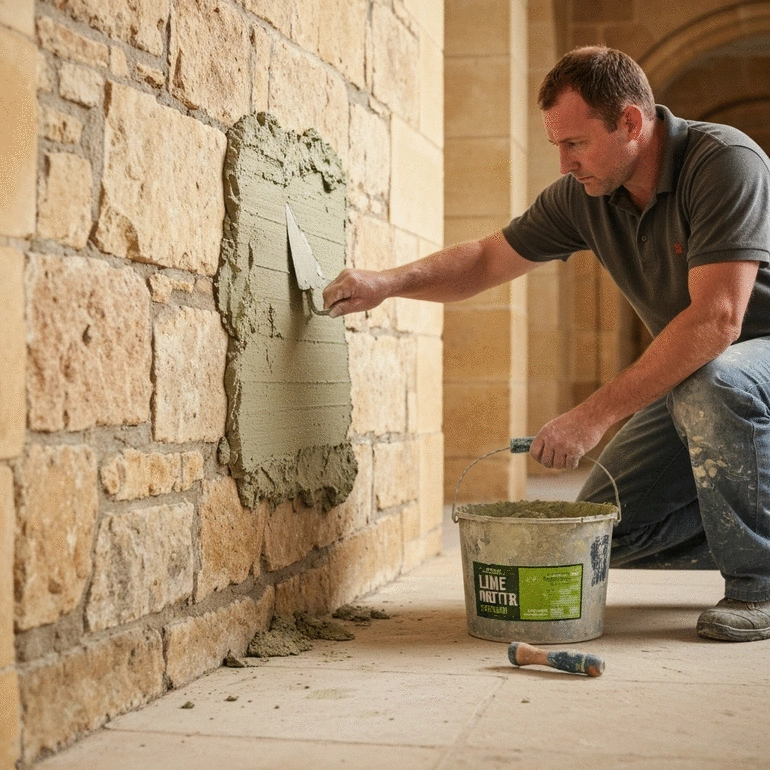
Melbourne's heritage homes carry more than just sentimental value. The handcrafted brickwork on a Victorian terrace in Fitzroy or a Federation-era cottage in Northcote represents a level of craftsmanship that modern construction rarely matches. When that brickwork starts to fail, property owners face one of the most consequential decisions in building management: restore what exists or clear the site and start again.
Both paths come with high cost, regulatory complexity, and long-term consequences. Getting the decision right requires understanding exactly what condition your brickwork is in, what Melbourne's heritage planning framework allows, and when restoration genuinely stops making financial or structural sense.
The bricks used in Melbourne's period homes are not interchangeable with modern materials. Many were fired using clay from local Victorian deposits, producing a density, colour, and texture that manufacturers stopped replicating decades ago.
Mortar formulations also differed significantly from contemporary cement-based products. Traditional lime mortar was designed to flex slightly with seasonal movement, allowing moisture to evaporate from the wall rather than becoming trapped inside the masonry.
This matters because using the wrong mortar during repair work causes serious long-term damage. Modern cement mortar is harder than the surrounding bricks, which forces moisture and stress to travel through the brick face rather than the joint.
The result is spalling, where brick surfaces crack and flake, which eventually turns a manageable repointing job into full-scale brick replacement. Skilled heritage restorers in Melbourne use lime putty or hydraulic lime mortars specifically because they are compatible with older masonry and prevent this cascading damage.
The craftsmanship embedded in heritage facades also contributes directly to property value. In Melbourne's competitive real estate market, quality restoration enhances curb appeal and market value in ways that standard repairs cannot. Buyers in suburbs like South Yarra, Carlton, and Hawthorn actively seek well-maintained period facades, and a botched repair or unnecessary replacement can permanently reduce a property's appeal.
Not every deteriorated wall requires demolition. In most cases, skilled tradespeople can address problems that look severe from street level. The key is identifying which issues fall within restorable range and which have crossed into structural failure.
Mortar joint deterioration is the most common problem and the most straightforward to fix. Bricks themselves can last more than 100 years; mortar generally lasts around 25 years before degrading, especially in exposed or weathered positions. Repointing, removing the compromised mortar, and packing the joint with a carefully matched mix is both cost-effective and structurally sound when the bricks themselves remain intact.
Efflorescence, which appears as white salt deposits on the brick surface, signals water intrusion behind the wall. Left unaddressed, it indicates ongoing moisture movement that will worsen over time. However, identifying and sealing the entry point, combined with careful cleaning and surface treatment, resolves the problem without touching the wall structure.
Visible cracks in mortar joints often reflect minor settlement or thermal movement rather than a failing structural core. A heritage-trained mason can assess whether the crack pattern is stable, actively progressing, or indicates something more serious beneath the surface.
Loose or displaced bricks are a red flag that warrants urgent attention, but replacement of individual units is well within the scope of restoration work. Specialist restorers can source reclaimed bricks that closely match the original batch in colour and density, then blend the new material using colour-matching techniques so the repair is visually seamless.
When these issues are caught early, heritage brickwork restoration in Melbourne typically costs between $150 and $350 per square metre for lime mortar repointing, with specialist tuckpointing adding to that figure. Smaller targeted repairs, such as a chimney, a section of a boundary wall, or a cracked lintel area, often fall in the $500 to $1,500 range, while full-facade projects on larger period homes can run considerably higher. The investment pays dividends in structural longevity, property presentation, and compliance with heritage controls.
Professional heritage brickwork restoration follows a structured sequence that protects both the building and the tradesperson's work from future failure.
The process starts with a detailed inspection to map every affected area and assess whether underlying structural issues are contributing to surface deterioration. Rising damp, failed wall ties, or a compromised damp-proof course can make mortar repointing alone a short-term fix rather than a lasting solution. A qualified restorer identifies these root causes before touching the facade.
Cleaning comes next. Decades of grime, pollution, and biological growth are removed using low-pressure water washing or carefully selected chemical treatments. Abrasive methods are avoided because they damage the brick face and remove the outer fired skin that gives heritage bricks their weather resistance. Once the surface is clean, the true extent of mortar loss, cracking, and discolouration becomes visible.
Mortar removal is done mechanically, usually to a minimum depth of 15 to 20 millimetres, to ensure the new mix bonds properly. The replacement mortar is mixed to match the original profile, colour, and composition as closely as possible. On buildings where accuracy carries significant heritage weight, samples of original mortar can be tested and replicated with precision.
Tuckpointing the technique of applying a coloured background mortar and then drawing a fine contrasting line along the joint, is used on facades where this finish was original to the building. It is highly skilled work and one of the services most associated with Melbourne's Victorian-era terrace houses.
Before making any decision about brickwork, property owners need to understand whether a Heritage Overlay applies to their site. Melbourne's planning scheme includes Heritage Overlay controls across a substantial portion of the inner suburbs, and these controls govern what can be altered, repaired, or demolished.
Under the Heritage Overlay, routine maintenance and like-for-like repairs generally do not require a planning permit. This means repointing crumbling mortar joints or replacing a damaged brick with a matching unit can proceed without council approval, provided the work does not change the appearance of the place or affect its significance. This is straightforward guidance for standard maintenance.
Anything that changes the appearance of the facade, alters the material composition of the wall, or involves partial or full removal of original fabric does require a permit.
The City of Melbourne's Heritage Design Guide makes clear that the poor structural or aesthetic condition of a significant or contributory building is not, on its own, sufficient justification for permitting demolition. The council's stated position is to encourage adaptive reuse as an alternative.
For buildings constructed in 1911 or earlier, the threshold is even higher. In many municipalities, the only grounds for approved demolition are a professional engineer's finding that the structure is structurally unsound and cannot reasonably be made structurally sound. A cost report itemising the remediation scope is typically required alongside the structural assessment.
This regulatory environment means that choosing to start fresh is not simply a financial or aesthetic decision. It requires documented evidence, professional reports, and council approval, and even with all of that, approval is not guaranteed.
Restoration is the right answer for most heritage brickwork problems, but there are genuinely situations where it is neither safe nor cost-effective to preserve what remains.
Severe structural failure changes the equation entirely. This can result from prolonged neglect, catastrophic water damage, significant foundation movement, or decades of inappropriate cement mortar repairs that have forced moisture into the brick body. When entire wall sections have lost cohesion where bricks shift under hand pressure, mortar has completely disappeared from deep into the wall, and the structure provides no reliable bearing capacity, attempting to retain that material creates an ongoing safety risk.
A structural engineer's assessment is the essential first step in any such situation. The engineer's report establishes whether the wall is genuinely beyond safe repair or whether the damage, while extensive, can still be addressed with targeted structural intervention followed by restoration work. This report is also the document that underpins any heritage demolition permit application to the council.
If the existing brickwork is structurally compromised beyond safe repair, bringing in a licensed demolition company Melbourne is the most cost-effective way to clear the hazard.
A licensed demolition contractor brings more than machinery. They carry the insurance, qualifications, and knowledge of council requirements to execute the clearance safely, manage asbestos and hazardous material obligations, and ensure the site is prepared correctly for whatever comes next.
On heritage sites, this work also requires sensitivity: adjoining party walls, shared footings, and facades that are still standing all require careful attention to avoid causing collateral damage to neighbouring properties or to the remaining portions of the building.
The decision to demolish and start fresh should be based on professional structural advice, not on cosmetic damage alone. A wall covered in severe staining, heavy efflorescence, or crumbling surface mortar can appear beyond saving to an untrained eye but remain perfectly sound beneath those surface problems. Getting an independent structural assessment protects owners from making an irreversible decision based on appearances.
The quality of any brickwork outcome depends heavily on matching the right tradespeople to the project.
For heritage restoration work, this means a mason with specific training and demonstrated experience in period facades. Questions worth asking a prospective restorer include what mortar system they plan to use and why, whether they have worked on similar buildings in the same suburb, and whether their previous work has involved Heritage Overlay compliance or review by heritage architects.
Melbourne has several long-established firms whose work has been supervised and approved by Heritage Victoria, and leading heritage architectural practices, this track record matters.
For structural assessments that will support permit applications or demolition decisions, the relevant professional is a qualified structural engineer. Their report needs to be sufficiently detailed to satisfy council requirements if permit applications are on the table.
For demolition work following a structural failure determination, licensing requirements apply. A licensed demolition contractor holds the credentials required under Victoria's building regulations and carries appropriate liability cover for the scope of hazardous works involved.
Do not use an unlicensed operator to cut costs on demolition. The liability exposure from an incident during demolition, particularly when asbestos-containing materials are present in older Melbourne buildings, is far greater than any saving on the initial quote.
Understanding the financial difference between these two paths requires realistic figures on both sides.
Heritage brickwork restoration labour rates in Melbourne run between $50 and $100 per hour for qualified masons, with specialist historic restoration work commanding upward of $100 per hour. Lime mortar itself costs considerably more than cement alternatives, between $150 and $250 per bag for quality lime putty mixes reflecting both material quality and the care required in mixing and application.
Full facade restoration on a double-fronted Victorian property, including repointing, tuckpointing, brick replacement, and cleaning, might run from $15,000 to $40,000 or more, depending on the facade area, access complexity, and extent of damage.
Demolition of a standard Melbourne residential dwelling typically takes one to two weeks and comes with permit costs, disposal fees, and site preparation expenses on top of the demolition contractor's fee. After demolition, a complete rebuild carries design, engineering, approval, and construction costs that represent an order of magnitude more than even an extensive restoration project.
The financial case for restoration, where the structure permits it, is almost always stronger than a demolition and rebuild. The exception arises when the structure itself is too far gone to support safe habitation, when the site value makes a contemporary build financially attractive regardless of restoration cost, or when building configuration issues make heritage renovation fundamentally impractical for the intended use.
Melbourne's heritage brickwork is not infinitely resilient, but it is far more recoverable than it often appears. Mortar deterioration, surface staining, cracking, and even loose bricks are problems that skilled restorers address every day using techniques and materials developed specifically for this purpose.
The city's planning framework strongly favours restoration over demolition, and for good reason, these facades represent an architectural legacy that once lost cannot be recreated.
The threshold for moving to demolition should be a professional structural finding of genuine irreversibility, not a visual assessment of surface damage. Work with qualified heritage masons, structural engineers, and licensed demolition contractors at each stage of the decision-making process, and the right choice will be based on evidence rather than assumption. Most of the time, the brickwork is worth saving.